BLOG
How to Apply for a Working Capital Loan Online: Required Documents Checklist
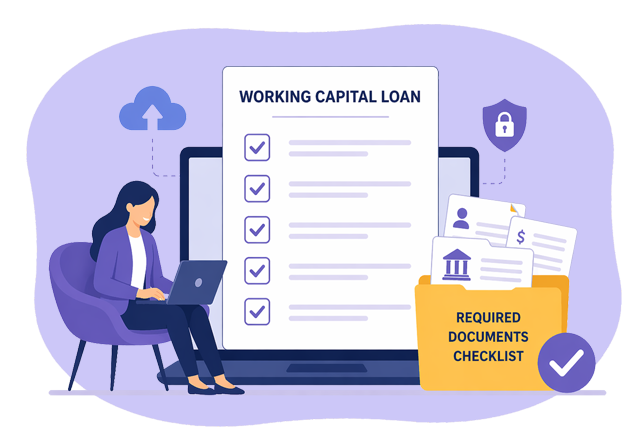
Mid-market businesses navigating financing, typically seeking business loans from $2 million to $100 million+, and generating over $1 million in annual revenue, face a unique challenge: preparing a complete and compelling loan package that meets lender expectations across a wide range of financing options.
Submitting a well-prepared application upfront can significantly accelerate timelines, often reducing funding cycles from weeks to days. The documentation you provide gives lenders a clear view into your company’s financial health, operational stability, and ability to repay.
What is a working capital loan?
When applying for a working capital loan online, lenders typically ask for 3–6 months of bank statements, recent tax returns, financial statements like profit and loss statements and balance sheets, accounts receivable reports, and personal identification. Having these documents organized before you start the application process can make a real difference in how quickly things move forward.
A working capital loan is a type of short-term financing designed to cover everyday operational business expenses, rather than long-term investments like equipment or real estate. Think of it as a way to keep your business running smoothly when cash flow gets tight, particularly important since over 80% of medium-sized businesses fail as a result of cash flow management issues.
Business owners commonly use working capital loans for:
-
Payroll coverage: Bridging gaps when revenue cycles don’t align with pay periods.
-
Inventory purchases: Stocking up before busy seasons or taking advantage of supplier discounts.
-
Accounts payable: Paying vendors on time to maintain good relationships.
-
Unexpected costs: Handling repairs or other surprises that pop up.
Documents needed for a working capital loan application
The documents lenders request all serve one purpose: helping them understand the risk, which involves determining whether your business can comfortably repay what you borrow. While every lender has slightly different requirements, most will ask for some combination of the items below. Lenders typically look for consistency across all documents provided to assess the business’ financial health accurately.
Business financial statements
Lenders want to see your profit and loss statement, balance sheet, and cash flow statement. These documents typically cover the most recent two to three fiscal years, plus year-to-date figures. Together, they tell the story of how your business makes money, manages expenses, and handles cash.
-
Profit and loss statement: Shows your revenue, expenses, and net income over a specific time period.
-
Balance sheet: Gives a snapshot of what your business owns (assets), what it owes (liabilities), and the owner’s equity at a single point in time.
-
Cash flow statement: Tracks how cash actually moves in and out of your business.
Business tax returns
Federal business tax returns from the past two to three years help lenders verify that the income on your financial statements matches what you’ve reported to the IRS. Lenders also use tax returns to confirm your business is in good standing with tax authorities.
Business bank statements
Three to six months of recent bank statements show your actual cash flow patterns, average daily balances, and transaction history. Even if your financial statements look strong on paper, lenders want to see real money moving through your accounts. Bank statements provide that ground-level view.
Legal and entity documents
Lenders ask for legal documents to confirm your business exists and to clarify who has the authority to borrow on its behalf. The specific documents depend on your business structure, but you can expect requests for:
-
Articles of incorporation or organization.
-
Business licenses and permits.
-
Operating agreement (for LLCs) or partnership agreement.
-
Employer Identification Number (EIN) verification letter from the IRS.
-
Documentation showing ownership percentages.
Personal financial statements and guarantees
For mid-market businesses, owners with significant equity stakes often provide personal financial statements. A personal financial statement details an individual’s assets, liabilities, and net worth outside of the business.
Many lenders also ask for personal guarantees. A personal guarantee means that if the business defaults on the loan, the owner becomes personally responsible for repayment. This is standard practice for many business loans, especially when the business itself doesn’t have extensive credit history.
Accounts receivable aging report
An accounts receivable aging report organizes your outstanding customer invoices by how long they’ve been unpaid, usually in 30-day segments (0–30 days, 31–60 days, and so on). Lenders review this report to assess the quality of your receivables. If most of your invoices are current, that’s a good sign. If many are 90+ days overdue, lenders may have concerns about collectability.
Accounts payable aging report
Similar to the receivables report, an accounts payable aging report shows what your business owes to vendors and suppliers, organized by due date. Lenders look at this to understand your existing obligations and get a sense of your payment habits. Consistently paying vendors on time signals financial discipline.
Business plan or use of funds statement
Lenders want to know how you plan to use the working capital. A brief statement explaining your intended use, whether that’s purchasing seasonal inventory, hiring temporary staff, or bridging a cash flow gap, helps lenders understand your thinking. You don’t need a 50-page business plan, but a clear explanation of purpose strengthens your application.
Please note, lenders may request additional documents or clarifications during the underwriting process depending on individual circumstances and lender requirements.
Common mistakes that delay or derail your loan application
Even well-prepared applications can hit snags. Knowing what trips up other borrowers helps you avoid the same pitfalls.
Submitting outdated financial statements
Lenders expect current financials. If you submit statements from two quarters ago, you’ll likely receive a request for updated versions, adding days or weeks to your timeline.
Providing incomplete or missing documents
Partial applications typically get pushed to the back of the queue. Gathering everything before you submit keeps your application moving forward without unnecessary back-and-forth.
Inconsistent information across documents
Revenue figures on your tax returns, bank statements, and financial statements all need to tell the same story. Discrepancies, even ones you can explain, trigger additional scrutiny and slow things down.
Failing to explain revenue fluctuations
If your business is seasonal or has experienced unusual revenue patterns, a brief explanation helps. Proactively addressing the “why” behind the numbers prevents lenders from drawing their own conclusions.
Applying to the wrong lender for your business size
Mid-market businesses with revenues over $1 million have different financing needs than small businesses seeking $100,000 loans. Cookie-cutter small business lenders may not understand your complexity, or offer loan sizes that match your requirements.
How to organize your loan documents for faster approval
A little preparation upfront can make a noticeable difference in how quickly your application moves through the process.
Create a master document folder
Setting up a dedicated digital folder with all your documents in one place makes everything easier to find. Organizing by category (financial, legal, tax) helps you respond quickly when lenders ask for specific items.
Label files clearly and consistently
Using descriptive file names like “CompanyName_PL_2024” rather than “doc1.pdf” speeds up lender review. It also signals that you’re organized and professional, which creates a positive impression.
Prepare a brief executive summary
A one-page overview covering your business, the loan amount you’re seeking, and how you plan to use the funds helps lenders quickly understand your request. Think of it as a cover letter for your application.
Anticipate lender follow-up requests
Having supporting documents ready before they’re requested, customer contracts, supplier agreements, inventory reports, keeps things moving. Working with an experienced financing partner helps you anticipate what specific lenders will ask for based on their typical requirements.
Why mid-market businesses benefit from a smarter approach to working capital financing
Mid-market companies face a unique situation. They’re sophisticated enough to require substantial financing, but they may lack the internal resources to manage a complex lender search. Applying to multiple lenders individually takes time that most business owners and CFOs simply don’t have.
Cerebro Capital’s data-driven marketplace addresses this gap. Our expert team guides you through document preparation based on what specific lenders require. Instead of guessing which lenders fit your profile, you receive matched options and can compare term sheets side by side.
We understand that middle market lending works differently than cookie-cutter small business financing. Our expertise spans asset-based lending, cash flow transactions, acquisition financing, and more, so you’re matched with lenders who understand businesses like yours.
Ready to streamline your working capital loan application? Get Started with Cerebro Capital to access financing options tailored to your mid-market business.
Key Takeaways
-
Most lenders ask for recent bank statements, tax returns, and core financial statements.
-
Legal and entity documents help lenders confirm ownership, authority, and business standing.
-
A clean folder structure, consistent file naming, and a one-page summary can reduce back-and-forth.
FAQs about applying for a working capital loan online
How long does it take to get approved for a working capital loan online?
Having complete, well-organized documentation ready before you apply is the most effective way to speed up any lender’s process. Cerebro’s lender network offers business loans $2 million to $100+ million.
Can I apply for a working capital loan with less-than-perfect credit?
Alternative lenders often work with businesses that have lower credit scores, though terms may be less favorable. Lenders also consider factors like business revenue, cash flow consistency, and time in business alongside credit history.
Do I need collateral for a working capital loan?
Some working capital loans are unsecured, while others require collateral such as accounts receivable, inventory, or equipment. Requirements depend on the loan amount, lender type, and your business’s overall financial profile. Unsecured working capital loans might involve higher interest rates or stricter terms, and Cerebro Capital can aid in negotiating favorable terms.
What is the difference between a working capital loan and a business line of credit?
A working capital loan provides a lump sum that you repay over a fixed term with scheduled payments. A line of credit offers flexible access to funds that you draw and repay as needed, similar to how a credit card works. Both serve short-term cash flow needs, but they function quite differently.
Can I apply to multiple lenders at once to compare working capital loan offers?
Yes, and comparing offers is often a smart approach to ensure you’re getting competitive terms. Platforms like ours streamline this process by matching your business with multiple qualified lenders at once, saving significant time compared to submitting individual applications.
Author: Cerebro Capital Capital Markets Team
Published: April 20, 2026
Cerebro Capital is committed to helping businesses secure the right financing through data-driven insights, objective guidance, and the broadest lender access in the market. Discover additional financing solutions such as working capital loans and strategies for managing debt by visiting our resource center.
Related Content

The world of middle-market lending has changed. Before COVID-19, traditional lenders showed flexibility as they worked to expand their books of business.

Increase the Chances of Closing a Loan
Significant disruptions to the lending landscape in the past four months have left corporate borrowers scrambling to stay on top of changing requirements

CFOs need to be constantly aware of how their company’s financial performance and market shifts affect its debt capacity, which is the best measure of your business’ ability to borrow.
Ready to get started?
Join the thousands of mid-sized companies who have used Cerebro.

- info@cerebrocapital.com
-
12 W Madison St.
Baltimore, MD 21201 - Cerebro Capital
- @cerebrocapital